
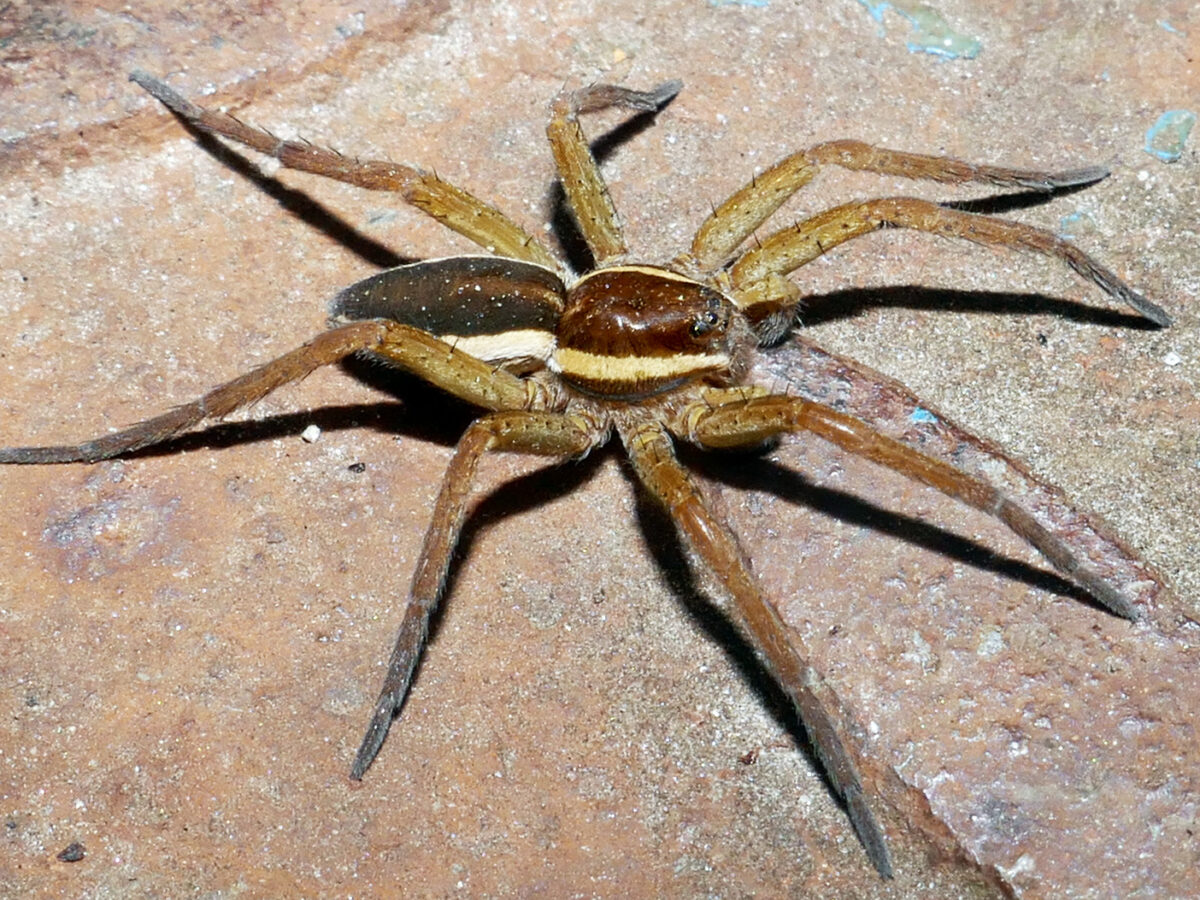
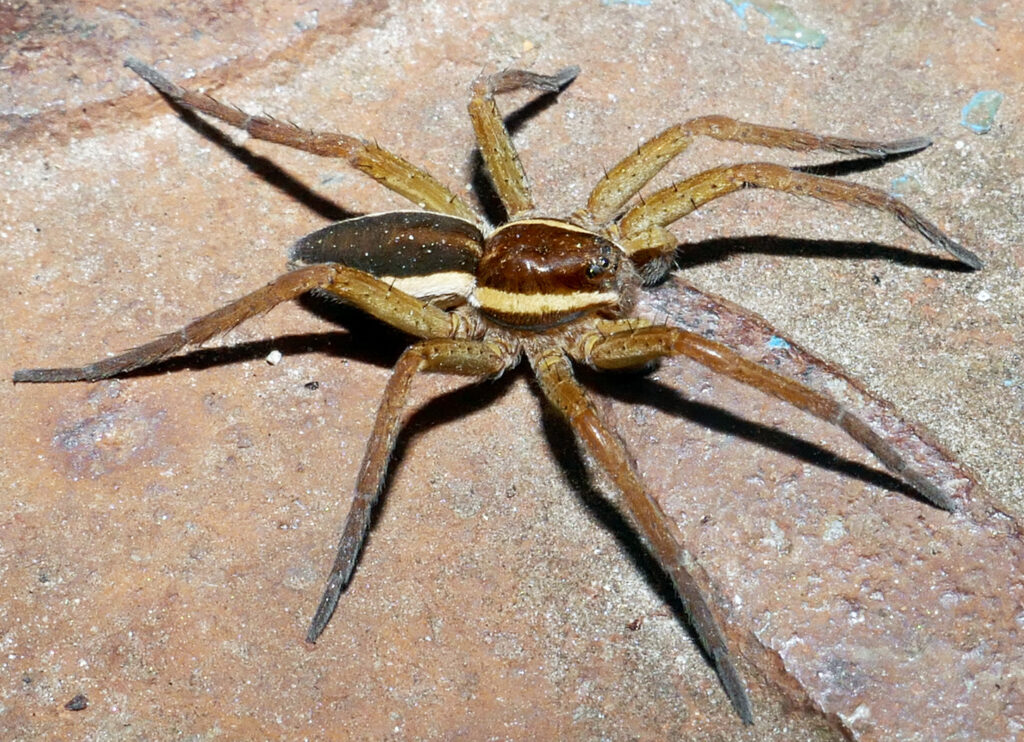
Did you know that the Tennant Canal in Pant-y-Sais, Jersey Marine, is the Welsh home of the fen raft spider. A special unique spider that can only be seen in a few areas of Britain. We are very fortunate to have one of those hotspots on our doorstep. As part of our Gwreiddiau Gwyllt project, we are looking at all the wonders the world of nature has to offer.
Here are some facts about the fen raft spider:
- The UK’s largest spider, and one of the rarest.
- It can grow to 23mm and can span up to 7 cm including its legs, and it has a white/cream/yellow line along one side of its body.
- It favours areas along the verge of the water around stiff, young plants.
- Scientific name: dolomedus plantarius.
- One of two species of the dolomedus ‘family’ that live in Europe.
- Life span can vary from one to three years.
- They appear as adults in the Spring (usually in late April or May) and come across a mate almost immediately.
- Females can be seen with egg sacks in June and the typical nursery webs can be seen from the end of June onwards.
- The majority of nursery webs are able to be seen in July and August, and females can survive until the Autumn.
The fen raft spider is a species from lowland wetlands. A lowland bog is a special type of wetland that gets its water only from rainfall, snow and mist; and for sure we get enough rain in Wales for these spiders to be able to survive in these bogs!
The fen raft spider is an ambush predator. They don’t build capture webs nor actively chase their prey until they are in easy reach. In captivity, the spiders produce diffusive webs but these appear to be an accumulation of silk drag lines overhead as they move around in a limited area. It appears more difficult for spiders to catch prey in the presence of a web than it is in one's absence. In typical hunting posture, the spider sits with its back legs on marginal and emergent riparian vegetation and its front legs resting on the surface of the water.
The species can now be seen in 7 sites across Britain. There are three natural populations to see; Pevensey Levels in East Sussex, Redgrave and Lophan Fen in Suffolk and Pant-y-Sais Fen and Crymlyn Bog in our county of Neath Port Talbot. Between 2010 and 2015, four new populations were established in the Broads, Norfolk through a translocation program, which were the Castle fen, Carlton fen, mid-Yare fen and the Ludham fen. One of the best ways to see these creatures is by visiting the canal during the summer and searching for spiders amongst young vegetation.