

About Us
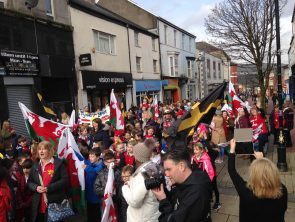
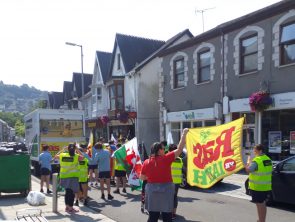
Menter Iaith Castell-nedd Port Talbot operates across the area (and within Aman Tawe) to encourage and promote the use of the Welsh Language. We provide a wide-range of activities and events in order to give people the opportunity to use the language, but we also encourage and provide non-Welsh speaking people with information regarding the benefits and opportunities to learn Welsh.
Geographical and Linguistic Background
Background
The first ‘Menter Iaith’ was formed in the Gwendraeth Valley in 1991, and in the years since then, communities across Wales have worked to form their own Menter Iaith. Today, there are 22 Menter Iaith organisations servicing all areas of Wales.
Menter Iaith Aman Tawe was formed in 1994, to service the areas of Cwmtawe, the Aman Valley and parts of South Powys and Swansea. Menter Iaith Castell-nedd Port Talbot was formed in 2002 after Menter Iaith Aman Tawe was split in two. One half became Menter Dyffryn Aman as part of a network known as Mentrau Iaith Myrddin in Carmarthenshire and a brand new Menter was formed from the other half to service the Neath and Port Talbot areas.
Since its formation in 2002, the Menter has developed a number of activities and projects to promote the Welsh language within the county.
Linguistic Background
According to the 2011 Census, around 15.3% of the county’s population can speak Welsh, which equates to some 20,698 people. The vast majority of them live in the top of Cwmtawe and Amman Valley with some communities such as Gwaun Cae Gurwen, Cwmllynfell and Lower Brynamman among the most prominent Welsh language areas in Wales as a whole. However, these are the areas that saw the greatest decline in terms of percentage and numbers of Welsh speakers between 2001-2011. As noted in the tables below, some communities such as Godre’r Graig and Ystalyfera have seen a decline of over 10% within a decade. It could be argued that the area that stretches from Trebanos to Cwmlllynfell and Rhos to Gwaun Cae Gurwen is the most important in the county in terms of its linguistic significance as it contains the highest numbers and percentages of Welsh speakers. This area is the county’s linguistic axis and the Menter Strategic Plan will pay special attention to plans that seek to strengthen the Welsh language in these key communities over the next few years. The loss of this endowment of natural Welshness would certainly have a huge psychological impact on the rest of the county and the significant growth of children attending the Welsh-medium schools of the area and those adults who voluntarily learn the language. This is one of the reasons why the Welsh Language Board decided to set up a Partnership in 2011 for the Aman Tawe area and appoint full time officers to promote the Welsh language in these notable villages.
The table below shows the percentage change in terms of Welsh speakers in these communities between 2001 and 2011: –
Community | % Welsh Speakers (2001) | % Welsh Speakers (2011) | % Change |
| Cwmllynfell | 68.2 | 58.8 | -9.4 |
| Brynaman Isaf | 68.1 | 60.8 | -7.3 |
| Gwaun-Cae-Gurwen | 67.9 | 55.8 | -12.1 |
| Ystalyfera | 54.6 | 46.0 | -8.6 |
| Trebanos | 42.4 | 33.6 | -8.8 |
| Godre’r Graig | 41.5 | 30.1 | -11.4 |
| Pontardawe | 37.4 | 31.0 | -6.4 |
| Alltwen | 35.9 | 29.5 | -6.4 |
| Rhos | 28.6 | 24.7 | -3.9 |
(Source: 2001/2011 Census)
Although percentages are a good reflection of the intensity of Welsh speakers, they can largely be misleading as a measure of language viability. Numbers on the other hand give a more detailed picture of demographic changes. See in the table below a significant decline has occurred in the number of speakers of the language over a decade of traditional Welsh communities such as Cwmllynfell, Lower Brynamman, Gwaun Cae Gurwen and Ystalyfera. Losing so many speakers in a relatively short period weakens the linguistic base of the area and leads to a faster decline as the language shift undermines the confidence and willingness of people to use Welsh in diverse social areas.
There are a number of reasons why linguistic erosion occurs in areas with percentages and relatively high numbers of Welsh speakers – a feature that is common to similar communities that extend across the Amman Valley and Gwendraeth Valley. The main factors that contribute to language degradation include: –
- Lack of language transmission at home
- Outflow / Immigration
- Negative perception of the inherent value of the language
- Lack of awareness of the advantages of bilingualism
- Lack of confidence amongst Welsh speakers
- The spread of Englishwords/phrases into the traditional Welsh languages
- Mixed marriage (e.g. English speaking & Welsh speaking)
- The power of Anglo-American influence on the interests of children and young people
- More deaths than births among Welsh-speaking families
Community | Welsh Speakers (2001) | Welsh Speakers (2011) | Change | % Comparative Change |
| Cwmllynfell | 741 | 669 | -72 | -9.72 |
| Brynaman Isaf | 861 | 776 | -85 | -9.87 |
| Gwaun-Cae-Gurwen | 1,860 | 1,572 | -288 | -15.48 |
| Ystalyfera | 1,614 | 1,339 | -275 | -17.04 |
| Trebanos | 580 | 459 | -121 | -20.86 |
| Godre’r Graig | 580 | 473 | -107 | -18.45 |
| Pontardawe | 1,826 | 1,624 | -202 | -11.06 |
| Alltwen | 800 | 664 | -136 | -17.0 |
| Rhos | 692 | 588 | -104 | -15.03 |
(Source: Census 2001/2011)
Census 2011Electoral Area | Each person 3 years old and over | Each person 3 years old and over that can speak Welsh | Percentage | |
| Castell Nedd Port Talbot | 135,281 | 20,698 | 15.3 | |
| Aberafan | 5,232 | 411 | 7.9 | |
| Aberdulais | 2,305 | 311 | 13.5 | |
| Alltwen | 2,251 | 664 | 29.5 | |
| Baglan | 6,627 | 557 | 8.4 | |
| Blaengwrach | 1,935 | 287 | 14.8 | |
| Llansawel – Dwyrain | 2,827 | 242 | 8.6 | |
| Llansawel – Gorllewin | 2,896 | 275 | 9.5 | |
| Bryn a Chwmafan | 6,330 | 1,024 | 16.2 | |
| Bryn-coch Gogledd | 2,139 | 297 | 13.9 | |
| Bryn-coch De | 5,706 | 699 | 12.3 | |
| Llangatwg | 1,647 | 211 | 12.8 | |
| Cimla | 3,835 | 350 | 9.1 | |
| Coedffranc Canolog | 3,870 | 425 | 11.0 | |
| Coedffranc Gogledd | 2,322 | 265 | 11.4 | |
| Coedffranc Gorllewin | 2,563 | 316 | 12.3 | |
| Creunant | 1,851 | 465 | 25.1 | |
| Cwmllynfell | 1,137 | 669 | 58.8 | |
| Cymer | 2,714 | 186 | 6.9 | |
| Dyffryn | 3,078 | 350 | 11.4 | |
| Glyncorrwg | 1,054 | 65 | 6.2 | |
| Glyn Nedd | 3,320 | 689 | 20.8 | |
| Godre’r graig | 1,571 | 473 | 30.1 | |
| Gwauncaegurwen | 2,823 | 1,576 | 55.8 | |
| Gwynfi | 1,314 | 92 | 7.0 | |
| Brynaman Isaf | 1,277 | 776 | 60.8 | |
| Margam | 2,908 | 295 | 10.1 | |
| Castell-nedd Dwyrain | 6,137 | 497 | 8.1 | |
| Castell-nedd Gogledd | 3,838 | 379 | 9.9 | |
| Castell-nedd De | 4,789 | 440 | 9.2 | |
| Onllwyn | 1,161 | 222 | 19.1 | |
| Pelennau | 1,113 | 178 | 16.0 | |
| Pontardawe | 5,232 | 1,624 | 31.0 | |
| Port Talbot | 5,457 | 518 | 9.5 | |
| Resolfen | 3,044 | 341 | 11.2 | |
| Rhos | 2,382 | 588 | 24.7 | |
| Sandfields Dwyrain | 6,692 | 504 | 7.5 | |
| Sandfields Gorllewin | 6,495 | 524 | 8.1 | |
| Blaendulais | 2,049 | 469 | 22.9 | |
| Taibach | 4,634 | 354 | 7.6 | |
| Tonna | 2,445 | 292 | 11.9 | |
| Trebannws | 1,367 | 459 | 33.6 | |
| Ystalyfera | 2,911 | 1,339 | 46.0 |
Useful Documents
Corporate Plan 2019 – 2021 >> For an English copy, please contact menter@micnpt.cymru
Annual Report 2017/2018 >> Report